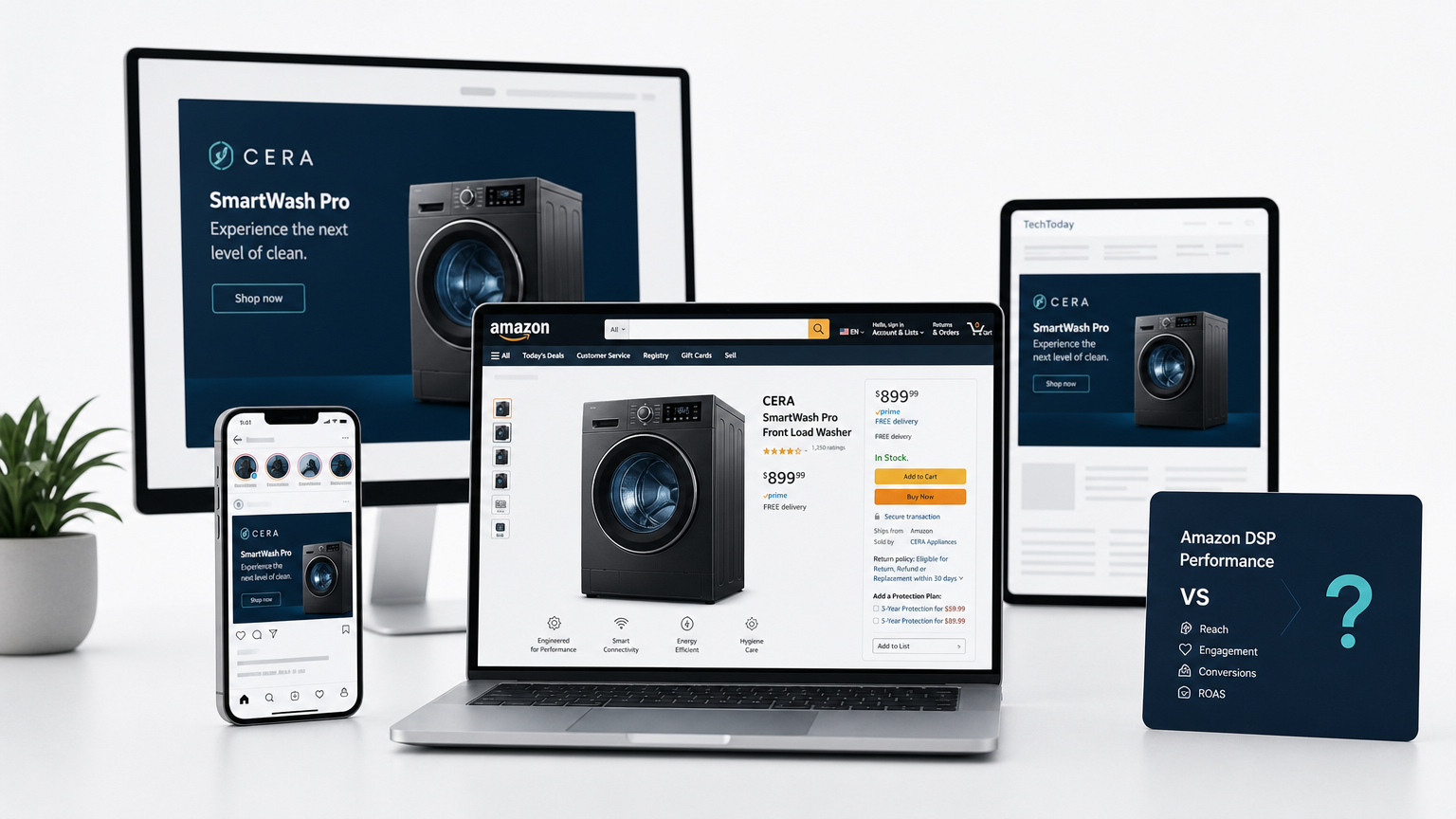
You’ve probably heard other sellers rave about Amazon DSP, but when you look at the minimum spends and jargon, it’s not clear whether Amazon DSP is actually worth it for your brand in India. The truth is, Amazon DSP can be a growth engine or an expensive distraction, depending on when you start and how you run it.
This guide breaks down how Amazon DSP works in 2026, what it really costs, the kind of ROI you can expect, and the situations where it beats Sponsored Ads. By the end, you’ll know if it belongs in your plan for the next 6–12 months or if you should double down on PPC first.
What Is Amazon DSP Really Buying You In 2026?
Amazon DSP is Amazon’s demand-side platform that lets you run display and video ads both on and off Amazon, using Amazon’s audience data. Instead of bidding on keywords, you’re paying to reach specific audiences based on behaviour, purchase history and intent signals.
For sellers who’ve already pushed Sponsored Products and Sponsored Brands hard, Amazon DSP 2026 offers a way to keep showing up in front of shoppers even when they’re browsing news sites, watching streaming content or reading product reviews. It shifts you from “only when they search” to “whenever they’re in the buying mindset”.
If you’re still building your PPC fundamentals, fix that first. Understanding how to build strong Sponsored Products and Sponsored Brands campaigns, and when to add Sponsored Display, is covered in depth in this comparison of Amazon ad types.
Amazon DSP Vs Sponsored Ads: What’s The Real Difference?
Most Indian sellers first meet Amazon ads through Sponsored Products and Sponsored Brands. These formats are intent-driven: someone searches a keyword, your ad appears, they either click or scroll past. When you compare Amazon DSP vs Sponsored Ads, you’re really comparing intent targeting with audience targeting.
Sponsored Ads are usually better for direct response and tight ACOS goals, especially when you’re still testing price points and listings. Amazon DSP advertising is stronger for mid- and upper-funnel goals like awareness, retargeting and repeat purchases. DSP can still drive sales, but you judge it on overall Amazon DSP ROI, not just last-click ACOS.
If your Sponsored Ads are messy, fixing campaign structure, placements and negative keywords will almost always give faster wins than jumping into DSP. Resources like the guide to Amazon PPC optimisation or a focused piece on negative keywords usually save more money than a premature DSP test.
How Much Does Amazon DSP Cost For Sellers?
There are two main cost components with Amazon DSP: media spend (what you pay for impressions) and any management or tech fee if you work through an agency or a managed-service provider. For self-service accounts, Amazon often expects a meaningful minimum monthly budget, and managed-service offerings usually set a higher floor.
This is where many smaller brands in India get stuck. If you’re spending only a modest amount per month on Sponsored Ads, jumping straight to a large DSP commitment can strain cash flow and make it hard to ride out the testing phase. Amazon DSP cost makes more sense once your PPC monthly spend is already healthy and consistently profitable.
A good rule of thumb: don’t treat DSP as a test if you can’t afford at least a few months of data. Unlike keyword campaigns where you can see signal within days, DSP audiences can take longer to ramp, especially for remarketing and loyalty tactics.
What Kind Of Amazon DSP ROI Can You Expect?
ROI on Amazon DSP depends on three things: your product economics, your creative and your audience strategy. If your margins are thin or your product has low repeat purchase rates, you’ll need to be more conservative with upper-funnel spend and focus more on retargeting.
Most brands that are happy with Amazon DSP ROI keep their expectations different from search PPC. They don’t chase a rock-bottom ACOS; they watch blended TACOS, branded search lift and repeat purchase behaviour over a few months. Tools and frameworks that explain ACOS vs TACOS vs ROAS, such as this metrics guide, are helpful to judge DSP in the right context.
If you sell in categories with higher average selling prices or strong lifetime value (for example, products with natural upsells or refills), DSP’s ability to keep your brand top-of-mind tends to pay off better. Low-priced, one-off products usually struggle unless you use DSP very surgically around retargeting and cross-sell.
When Is Amazon DSP Worth It For Indian Sellers?
Amazon DSP becomes worth it once your Sponsored Ads are profitable, your listings convert consistently, and you’re hitting a ceiling on how much more you can scale via keyword-based campaigns. For many growing brands, that’s around the time you start focusing more on branded traffic share and defending your category.
India’s peak shopping periods such as the big festive sales are also moments where DSP shines. You can run awareness and remarketing audiences in the weeks before the event, then reap the benefit through higher search conversion and brand recall when shoppers are finally ready to buy. Planning this alongside your Sponsored Ads requires solid control over placements and dayparting; see strategies such as Q4-focused Amazon playbooks and PPC dayparting for inspiration.
If your catalog is still small, your reviews are patchy, or your creative assets aren’t ready for high-quality display and video ads, prioritise fixes there first. DSP will only amplify whatever state your brand is already in.
Core Amazon DSP Strategies That Actually Work
For most sellers, three Amazon DSP strategies justify the spend: retargeting, competitor conquesting and loyalty/repurchase campaigns. You don’t need a dozen line items to start; you need a clear, testable plan.
Retargeting focuses on shoppers who viewed your product pages but didn’t purchase. In many accounts, this delivers the strongest immediate performance because the audience is already warm and familiar with your offer. Once you get this stable, you can expand to conquest tactics that target shoppers who visit competing product detail pages.
Building A Foundation With Amazon DSP Retargeting
Retargeting is usually the first Amazon DSP tactic Indian brands should test. It’s the closest to Sponsored Ads behaviourally, because you’re still talking to people who’ve shown intent on Amazon itself.
Start with clear audience windows: recent product viewers, cart abandoners and past purchasers due for a refill or upgrade. Match creatives tightly to what they saw, and don’t send them back to generic pages. Tools that already segment traffic and performance by time and placement, such as those described in Amazon dayparting guides, usually pair well with this approach.
Scaling Beyond Search With Prospecting Audiences
Once retargeting is working, start prospecting through Amazon DSP advertising using lifestyle, in-market and lookalike-style audiences. This is where Amazon’s shopper data really comes into play: you can reach people who’ve bought in your category or adjacent ones without waiting for a keyword trigger.
Be more patient with these campaigns. They work better when you have strong creatives that educate quickly and make a clear offer, especially for audiences who may not know your brand yet. Expect the path from first impression to sale to be longer than for Sponsored Ads.
Using DSP To Protect And Grow Branded Demand
As your brand grows, one of the easiest ways to lose profit is to let competitors steal your branded searches. You might be bidding on your own brand terms already, but DSP can reinforce that by keeping your messaging present across the web.
Combined with a thoughtful structure for branded vs non-branded PPC campaigns, you can build a system where DSP feeds awareness and then search campaigns close the loop. If you haven’t already formalised that split, resources on branded vs non-branded Amazon PPC strategies are a good place to start.
How To Decide If You’re Ready For Amazon DSP In 2026
Before you commit to Amazon DSP 2026, run a simple readiness check. Look at your current Sponsored Ads account and ask: is my ACOS under control, are my top keywords stable, and do I know my break-even thresholds?
If the answer is no, work on improving your PPC first through better bid rules and structure. Guides such as bid optimisation formulas and articles on calculating break-even ACOS will give you the clarity you need before layering DSP on top.
If the answer is yes, then build a 90-day Amazon DSP test plan with clear budgets and goals: retargeting first, then targeted prospecting, then loyalty. Review blended TACOS and branded search demand each month, not just DSP’s last-click numbers.
Conclusion
Amazon DSP can be worth the investment for Indian sellers once your Sponsored Ads machine is stable, your margins support longer journeys, and you’re ready to push beyond keyword-based growth. It’s not a magic switch; it’s a tool that amplifies strong fundamentals.
If you already have those fundamentals in place and want sharper visibility into performance data to back your Amazon DSP decisions, pairing your campaigns with a tracking and optimisation platform such as Insta Track Pro can help you scale more confidently in India. Start by tightening your PPC metrics, then decide how boldly you want to bring Amazon DSP into your mix.
Frequently Asked Questions
Q1. Is Amazon DSP worth it for small Amazon sellers in India?
Ans: Amazon DSP can work for smaller sellers, but only once your Sponsored Ads are already profitable and stable. If your monthly ad spend is still modest or your listings don’t convert consistently, you’ll usually see better returns by improving Sponsored Ads first and using DSP later for retargeting and brand growth.
Q2. How is Amazon DSP different from Sponsored Ads?
Ans: Sponsored Ads are keyword-based and trigger when shoppers search or browse on Amazon, making them ideal for direct-response performance. Amazon DSP advertising targets audiences instead, using shopper behaviour and purchase data to show display or video ads on and off Amazon. You judge DSP more on overall impact than just last-click ACOS.
Q3. What budget do I need to start Amazon DSP?
Ans: There’s no single fixed amount, but Amazon DSP cost usually involves a minimum monthly media spend set by Amazon or by the partner managing your account. Before you consider that level of commitment, make sure your margins, cash flow and Sponsored Ads performance can support at least a few months of DSP testing.
Q4. How do I measure Amazon DSP ROI beyond ACOS?
Ans: To understand Amazon DSP ROI properly, look at blended metrics such as TACOS, total sales, branded search volume and repeat purchase behaviour over time, not just last-click performance. Comparing ACOS vs TACOS and tracking how your overall account responds while DSP is live will give a truer picture of its impact.
Q5. When should I use Amazon DSP vs Sponsored Ads for a new product launch?
Ans: For a fresh launch, focus first on Sponsored Products and Sponsored Brands to prove demand, refine pricing and gather reviews. Once your Sponsored Ads structure is solid and you’re hitting limits on scale, use Amazon DSP for retargeting product viewers, then for prospecting audiences to widen reach around your hero SKUs.
Q6. Can Amazon DSP help increase repeat purchases for my brand?
Ans: Yes, one of the strongest uses of Amazon DSP for sellers is building loyalty and repurchase campaigns that target past buyers at the right time. By using audience segments based on past orders and pairing them with tailored creatives, you can nudge customers back for refills, upgrades or cross-sell products.
Leave a Reply